
Ten production methods, from Greenland to the ondes Martenot, and the gear behind each one
Search for French electronic music and you will land on the same handful of names you have known for fifteen years. The atmospheric end of the scene happens elsewhere: on foreign labels, inside conservatoires, on a stretch of Arctic sea ice. The ten artists here share neither a style nor a generation. What they share is a method. Each one sets a production constraint before writing a single note, and that constraint is what produces the space you hear. An Inuit village, a train carriage, an instrument designed in 1928, a single monophonic synth, a speaking voice, almost nothing at all. For each of them I list the software and hardware wherever it is publicly documented. Ten ways in, ten specific records, and enough to seriously widen an already well-stocked electronica playlist.
Molécule: go and fetch the sound where it lives
Romain De La Haye has released music as Molécule since 2006, first in the wake of French dub and abstract hip-hop, then turning firmly towards techno in 2010. His principle fits in one sentence: build nothing in the studio. In 2013 he boarded a North Atlantic trawler to make 60°43′ Nord. In 2017 he spent five weeks in Tiniteqilaaq, a hunting village on the east coast of Greenland, from 24 January to 5 March. The album that came out of it, -22.7°C (Because Music, 2018), is named after the lowest temperature recorded while he was there. Ice cracking, sled dogs, Inuit voices, wind: the raw material goes straight into a dark techno record, untouched once he got home. The twenty-five-minute documentary he co-directed with Vincent Bonnemazou, first screened by the Philharmonie de Paris as part of its Electro exhibition, shows the other side of the dogma: isolation, the language barrier, constant doubt.
On gear he publishes no detailed list, but he does give the one number that matters: 150 kilos of equipment taken to Greenland, flown in on two planes and then a helicopter. His method is not travel light, it is rebuild a complete studio somewhere else. The cost of the constraint is logistical before it is musical. Start with Sila and Inlandsis.
Thylacine: when the journey becomes the studio
William Rezé, from Angers, a classically trained saxophonist, moved to electronic music for an entirely practical reason: he wanted to be able to work anywhere. In 2015 he boarded the Trans-Siberian and wrote Transsiberian over a two-week trip that included 160 hours on the train. In 2019 he did it again with Roads Vol. 1, written inside a 1972 Airstream converted into a studio and shipped to Buenos Aires, followed by a Vol. 2 fed by the Faroe Islands. In February 2024 he inverted the constraint: and 74 musicians was recorded live at Le Quai in Angers with the Orchestre National des Pays de la Loire and the Maîtrise des Pays de la Loire, conducted by Uèle Lamore, who transcribed every part.
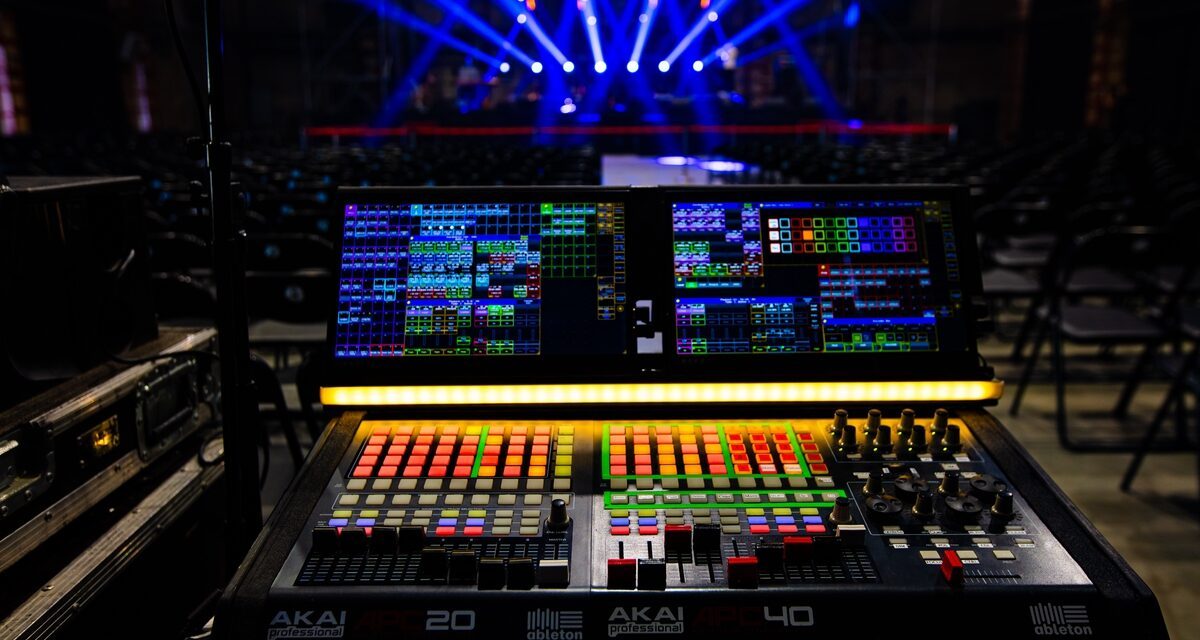
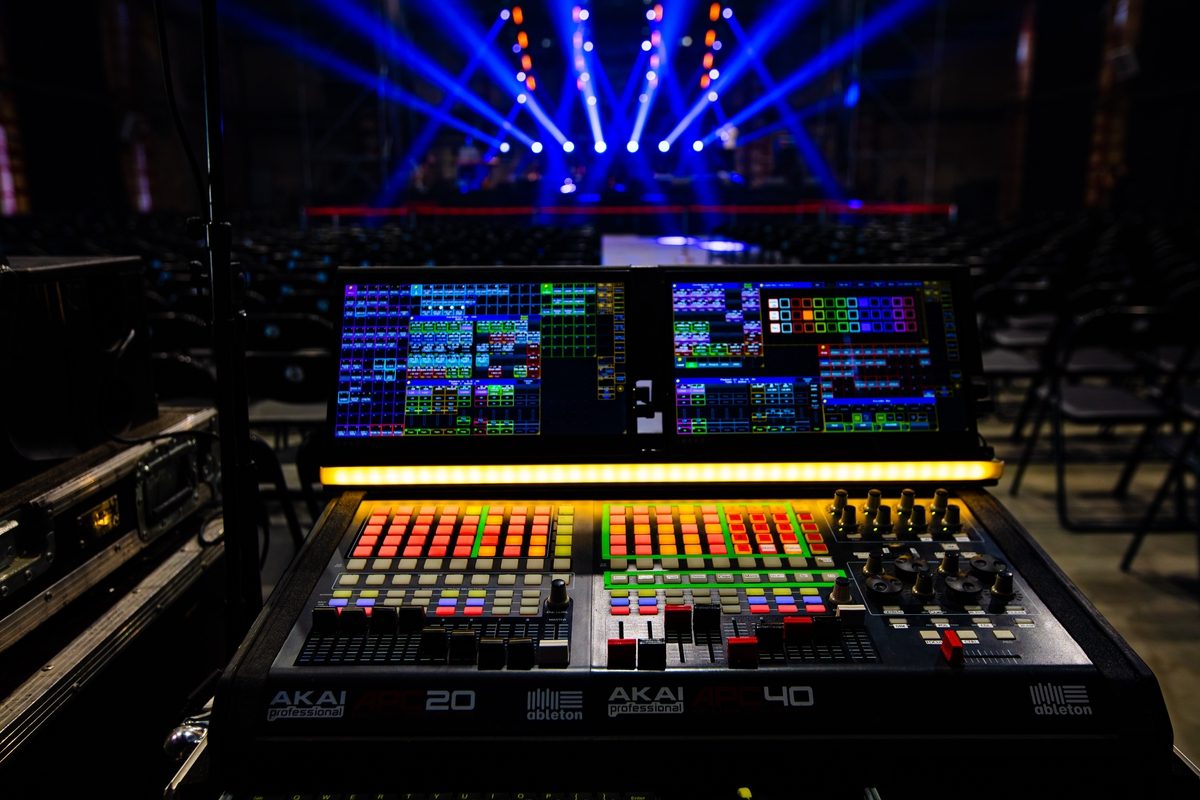
His setup is the most instructive on this list for anyone working in a DAW. Ableton Live is his working environment, enough so that he has taught a masterclass on it, driven on stage by Novation Launchpads and a MIDI controller built to order by the Argentinian workshop Yaeltex. Yet the record that started it all cost nothing: for Transsiberian it was headphones, a laptop and a small keyboard, as he puts it himself. The mobile studio came afterwards, not before. Start with Poly and Saksun.
He is also the one who quietly closes the loop with the pioneers. For OVNI(s), the 2021 Canal+ series he scored, he spent several nights locked inside a synthesiser museum in Switzerland recording machines from the late 1970s, while the opening titles use Zero Gravity, a track by Tangerine Dream and Jean-Michel Jarre, who publicly said he was delighted by the choice. Two generations of French synthesisers in the same episode, forty years apart. If that lineage interests you, the story of how France invented this sound is worth an hour of your time.
Kangding Ray: architecture applied to sound
David Letellier was born in Normandy and trained as an architect at the École Nationale Supérieure d’Architecture de Bretagne. A former noise-band guitarist, he moved to Berlin in 2001 to finish his studies and never left. As Kangding Ray he has released, on Raster-Noton and then Stroboscopic Artefacts, a body of work that holds techno and experimental music in the same hand: Solens Arc (2014), Cory Arcane (2015), Ultrachroma (2022), Zero (2024). In 2019 he founded his own label, ara, after three years of deliberately non-club research.
The architecture training is not a biographical footnote. It explains music built in volumes, where depth of field matters as much as melody. He is also the only artist here whose work has recently been recognised in film: his score for Óliver Laxe’s Sirāt won a soundtrack prize at Cannes, according to Resident Advisor. He publishes no gear list. What he documents is his approach to spatialisation, not his boxes. Start with Predawn Qualia and Ultrachroma.
Chloé: the hybrid studio, openly
Chloé Thévenin has been DJing since the mid-1990s, resident first at Le Pulp and then at Rex Club, founder of the Lumière Noire label in 2017, and winner of the Sacem Grand Prix for electronic music in 2022. She has written for film, for the choreographer Maud Le Pladec, for the artist Noémie Goudal at Tate Modern, and performed at the closing ceremony of the 2024 Paralympic Games in Paris. Album by album her music has drifted from the club towards mood and narrative. Endless Revisions (2017) is still the best way in.
She is the only artist here who has laid out her studio in public: a Roland SH-101, a Roland VP-330 vocoder, the Soma Pulsar-23 semi-modular drum machine, a Novation Peak, the Soma TERRA digital synth for expressive MPE playing, an OTO BAM reverb for re-amping, and API preamps. All of it recorded into Ableton Live in a live configuration, refined afterwards if need be. Her favourite free plugin is Valhalla Supermassive. And her view on equipment is worth more than most articles on the subject: the myth that needs dismantling is that good music requires expensive gear. Start with Recall and Intronics.
Étienne Jaumet: the acoustic instrument inside the machine
Saxophone at the Paris conservatoire, sound engineer by trade, one half of Zombie Zombie alongside Cosmic Neman, saxophonist in James Holden’s live band: Étienne Jaumet is the link between jazz, krautrock and French techno. His first solo album, Night Music (Versatile, 2009), was mixed by Carl Craig and features Emmanuelle Parrenin. The opening track runs twenty minutes on a slow arpeggio and a treated saxophone. La Visite (2015) and Huit Regards Obliques (2018) carry the idea forward.
The gear behind Night Music was documented by reviewers at the time: a TR-808, a Prophet 600 and a Micromoog borrowed from friends, arranged around the saxophone. He is the useful counter-example here: no large studio, no collection, borrowed machines and a wind instrument. The signature comes from the playing, not the rack. Start with For Falling Asleep and Entropy.
Christine Ott: reviving a forgotten French instrument
The ondes Martenot, developed by Maurice Martenot in the late 1920s, came close to disappearing when its inventor died in 1980. Christine Ott, a gold medallist of the Strasbourg conservatoire and then a student of Valérie Hartmann-Claverie and Jeanne Loriod in Paris, has taught the instrument in Strasbourg since 1997. She spent ten years in Yann Tiersen’s band and regularly plays with Tindersticks. In 2020, with Chimères (pour ondes Martenot) on Nahal Recordings, she finally put the instrument at the centre: according to her label, it is the first full contemporary album written for solo ondes.
The setup is simple and radical. A monophonic instrument designed in 1928, maintained by a specialist luthier, with Paul Régimbeau (Mondkopf) and Frédéric D. Oberland (Oiseaux-Tempête) shaping the signal live through outboard effects. No synthesiser anywhere, and yet it sounds like a modular. PopMatters wrote that she took the ondes Martenot to a level it had not reached before; Volutes, by her duo Snowdrops with Mathieu Gabry, made The Guardian’s ten best contemporary albums of 2020; and Radio France picked out Time to Die the following year. Start with Comma and Darkstar.
Colleen: holding an entire record with one monophonic synth
Cécile Schott, a former English teacher now based in Spain, has released music as Colleen since 2003: nine albums, an American label in Thrill Jockey, and a reputation built almost entirely in the English-speaking world. For years she worked with the viola da gamba, played flat on her lap and run through loops and dub production techniques, before turning to synthesis.
She is the textbook case here. Le jour et la nuit du réel (2023) is a double album built from three machines: a Moog Grandmother semi-modular monosynth, a Roland RE-201 Space Echo tape delay and a Moogerfooger Analog Delay. No digital processing added. To work around the monophony she uses unquantised sequencing and a deliberately uneven touch, what she calls a hybrid human-machine style. Twenty-one movements, seven suites, running from day into night. A new album, Libres antes del final, came out on Thrill Jockey in March 2026. Start with Les parenthèses enchantées and Night looping.
Sylvain Chauveau: the quietest music he can make
Born in Bayonne in 1971 and living between Anglet and Barcelona, Sylvain Chauveau moved from rock to solo work in 1998 under three rules he states himself: stay as close as possible to the abstract beauty of silence, make sure every sound is necessary, and root the music in his own cultural history. He is self-taught, does not read notation, and freely admits he does not always know which notes he is playing. Un autre décembre (2003, on FatCat’s 130701 imprint) remains his best-known record: slow piano, field recordings, electronics you can barely detect. He once described it as the quietest album he would ever make, a promise only half kept, since he released ultra-minimal in 2024.
There is more here than the music. Since 2019 he has worked on reducing the environmental footprint of the music industry, and his label credits that near-silent catalogue with over a hundred million streams. The gear amounts to a piano, a few acoustic instruments played by others, and a recorder. It may be the best available antidote to plugin escalation. Start with La lettre qu’il n’envoya jamais and Pianisme.
Félicia Atkinson: the voice as material, not as melody
A visual artist as much as a musician, Félicia Atkinson co-runs Shelter Press, a label and publishing house based in Normandy that puts out artists’ books alongside records. She works with the one material ambient music usually avoids: speech. On Space As An Instrument (October 2024), a piano held together by repeating figures meets murmured phrases in English and French, treated as texture rather than as singing. Promenades followed in June 2025, then a four-hands record with Christina Vantzou. There is almost never a beat: the structure rests on silence, reverberation and the room left for the listener.
Her career says a great deal about where this scene actually lives. You will find her at the Philharmonie de Paris, at INA GRM’s Présences Électroniques festival, in the Swiss pavilion at the 2022 Venice Biennale, far more often than on the usual electronic circuit. She publishes no setup either, which is consistent: for her the apparatus is the recording location and the text, not the machine. She and Sylvain Chauveau made a record together, Roman Anglais, back in 2008. Start with Thinking iceberg and La pluie.
Léonie Pernet: classical percussion turned electronic
Born in 1989 in Châlons-en-Champagne, Léonie Pernet studied classical percussion at the Reims conservatoire before drumming for Yuksek and DJing at night. That is an instrumentalist’s path rather than a bedroom producer’s, and you can hear it: her records are built like rhythmic pieces even when they slow down. Crave (2018) and Le Cirque de Consolation (2021) established her; the third, Poèmes Pulvérisés, came out on 6 June 2025 on Crybaby and InFiné.
That last record grew out of a journey towards her father’s family, from the chalk skies of the Marne to the deserts of Niger in her label’s words, and takes its title from a René Char collection. She also writes for screen and stage, including the Arte series H24 in 2021, and played the Philharmonie de Paris in November 2024. Again, no published gear list: what shapes her music is percussion training, not a rack. Start with Réparer le monde and Le Cirque de Consolation.
The gear, summarised, and what the table does not say
Here is what is actually documented, with sources. Only four artists out of ten publish an identifiable setup; the other six describe a method and leave the machines in the dark. The full detail sits in the portraits above. This is not coyness. It is the clearest possible sign that the gear is not the point.
|
Artist |
Documented tools |
Where to start |
|---|---|---|
|
Molécule |
Full studio transported on site (150 kg) |
-22.7°C (2018) |
|
Thylacine |
Ableton Live, Launchpad, custom Yaeltex controller |
Transsiberian (2015) |
|
Kangding Ray |
Not published |
Ultrachroma (2022) |
|
Chloé |
Ableton Live, SH-101, Pulsar-23, Peak |
Endless Revisions (2017) |
|
Étienne Jaumet |
Saxophone, TR-808, Prophet 600, Micromoog |
Night Music (2009) |
|
Christine Ott |
Ondes Martenot and outboard effects |
Chimères (2020) |
|
Colleen |
Moog Grandmother and two analogue delays |
Le jour et la nuit du réel (2023) |
|
Sylvain Chauveau |
Piano, field recordings, minimal electronics |
Un autre décembre (2003) |
|
Félicia Atkinson |
Not published |
Space As An Instrument (2024) |
|
Léonie Pernet |
Not published |
Poèmes Pulvérisés (2025) |
|
Rê>ON (bonus) |
Ableton Note and Live, ATH-M50X, Launchpad Pro MK3 |
Connected Dreams (2025) |
Critics and listeners: what gets said, and where the two diverge
One thing becomes obvious once you gather the reviews: this scene is validated mostly outside France, and through different channels depending on the artist. Here is the state of play, source by source.
Molécule is followed project by project by the French electronic press, Tsugi, Mixmag France and Red Bull, which called him the pioneer of nomadic electronic music. The recurring reservation is predictable: the apparatus generates more commentary than the music, and a fair share of the coverage spends longer on the expedition than on the tracks. His clearest recognition came from another field entirely, with a prize at the NewImages festival in 2019 for the virtual reality version.
Thylacine draws the widest critical consensus, with Libération filing him under future classics, and the sharpest split among listeners. On retail pages, and 74 musicians collects opposite buyer reviews, one of them dismissing it flatly as a rather flat pseudo-live album. The split is instructive: critics praise the orchestral gesture, part of the audience prefers the immersion of the travel records.
Kangding Ray has the opposite trajectory. Almost invisible in the French music press, he has been reviewed for over a decade by English-language specialists, and Resident Advisor describes him as one of the few who genuinely makes techno and experimental music converge. His wider recognition came through cinema, not through records.
Chloé has the most institutional recognition of the group: the Sacem Grand Prix in 2022, work with IRCAM, the Paralympic ceremony. The club press followed her on Endless Revisions, described as a striking return after seven years without an album. Her audience is split between Rex Club and the living room, and the two do not read the same records.
Étienne Jaumet is the most argued-over name here, which is exactly what makes him interesting. Drowned in Sound and XLR8R welcomed Night Music on release; themilkfactory was considerably cooler, faulting the album for settling at times into an over-deferential nod to Detroit techno. A half-successful record, in other words, which beats a polished and forgotten one.
Christine Ott has the best press of the ten, and it is entirely in English. PopMatters on Chimères, The Guardian on Volutes. In the French general press, almost nothing.
Colleen sums up the anomaly on her own. Pitchfork gave Captain of None 7.6 out of 10, and a French radio programme describes her as barely known at home but well respected abroad. The listener comments on her Bandcamp pages are among the most loyal of anyone here, returning again and again to words like hypnotic and patient.
Sylvain Chauveau shows the widest gap of all between media coverage and listener attachment. Almost no French general press, but responses on Bandcamp of unusual intensity, several of them mentioning tears on a first listen, and a catalogue his label credits with over a hundred million streams. An artist nobody reviews and plenty of people play.
Félicia Atkinson is well received by the English-language specialist press, with broadly favourable aggregate reviews for The Flower and the Vessel, but her recognition runs mainly through contemporary art institutions, biennials and art centres, rather than through music journalism. That is not a career accident; it is her territory.
Léonie Pernet is the only one on this list to be genuinely well received in France. Magic RPM calls her one of the most singular figures on the French scene, Benzine and the Fnac’s L’Éclaireur reviewed Poèmes Pulvérisés warmly, she won the Prix Joséphine in 2021 and plays the Olympia on 31 March 2026. She is also the closest to song form, which is probably not unrelated to the exception.
The conclusion is unflattering but clear: out of ten artists, one gets sustained critical attention in France. The other nine depend on the English-language press, on institutions, on film, or on word of mouth between listeners. When curation disappears, it is not the records that go missing. It is the conversation around them.
My own verdict, as a listener and a composer
One observation before the verdicts: of these ten, it is the women on the list whose approach I feel closest to in my own work. One exception, Thylacine, who remains my personal favourite of the selection.
With Chloé it is the style that catches me, and above all the progressions in sound and rhythm: the way a texture and a beat move together across a track instead of simply stacking up.
Christine Ott pushes furthest in the direction I am looking for: more floating, more atmospheric. Hers is probably the world on this list closest to what I am trying to do as Rê>ON.
Colleen is a notch more concrete. You hear the machine and the hand, where Ott dissolves everything into the pad. Both speak to me, for different reasons.
Sylvain Chauveau is far more instrumental and far more classical than the rest, and yet the effect on the listener is the same: it is calming. Proof that you can arrive at the same place by a route with almost nothing electronic about it.
Félicia Atkinson sits at the opposite end. Some of her tracks are very dark, enigmatic, at moments genuinely unsettling. It is not what I write today, but I would not disown it: it is territory I would like to explore.
Léonie Pernet closes the list with something distinctly more pop, well apart from all the worlds before it. She belongs here, but she is plainly not after the same thing as the other nine.
That leaves Molécule, Kangding Ray and Étienne Jaumet, and I am not going to manufacture an enthusiasm I do not feel. Their talent is not in question: all three approaches are solid and I can see exactly what they are after. It is the style that leaves me cooler, without my needing to turn that into a complaint. Some records you respect without going back to them.
Which brings me to something I had not anticipated. I did not sit down deciding to respond mainly to the women on this list; I noticed it while rereading my own notes. Seven spontaneous verdicts, and the three I had left aside were three of the five men. The selection is exactly balanced, five and five. If it struck me at first as a very female list, that probably says more about everything else I listen to.
What these ten methods change in practice
None of these records starts from a preset. Each begins with a constraint set before any writing: a place, a vehicle, an instrument, a single machine, a voice, a rule about silence. The constraint makes the style, not the other way round. All of it is transferable tonight, at no cost, whatever you own: write a whole track with one synth and two effects, as Colleen did; ban every digital plugin for a session; go and record thirty minutes of material somewhere you barely know, as Thylacine did with headphones and a laptop; start from spoken text rather than a melody, as Félicia Atkinson does; keep only the sounds whose absence you would notice, as Sylvain Chauveau does.
The corollary is less comfortable. If Chloé, who owns an SH-101 and a Pulsar-23, says the myth worth dismantling is the one about expensive gear, and if the most travelled album here was written on headphones in a railway carriage, then the equipment question comes after the method question. A Push, a Move, an MPC or a hundred-euro controller change nothing until the rules of the game are set. The same logic runs the other way: these ten are better championed abroad than at home. The deficit is not in production, it is in recommendation. A generation earlier, Jean-Michel Jarre carried that gateway role on his own, and Jean-Jacques Perrey wrote the most-heard piece of French electronic music without anyone knowing his name. There is no longer any reason for a single artist to carry a whole scene, which is exactly the work of the Atmospheric Electronic hub.
Bonus: Rê>ON, composing on the move with Ableton Note
I am adding myself at the end of this list, not on the same level, but because my constraint is of the same order and is possibly the most reproducible of them all. As Rê>ON I write atmospheric pads on the move, using Ableton Note on a phone, then pick the sketches up in Ableton Live. Two albums have come out of it, Connected Dreams and Les souvenirs connectés, and I described the method in detail in the article about that mobile sketchpad.
What Note solves for me is not a shortage of ideas. As I wrote at the time, the real problem is not running out of ideas, it is losing them between the moment they appear and the moment I switch the machine back on. You cannot whistle a pad the way you whistle a melody; you feel it, and once the mood has passed you do not replay it, you reconstruct it badly. Note has no record button: you play, the app keeps what you did. The happy accident is already saved before you have asked yourself whether it deserved saving. My rule fits on one line: sketch on mobile, finish in Live.
The gear is deliberately short. Ableton Live on a MacBook Pro M2 Max for production, an iPhone 16 Pro Max running Ableton Note for capture, and a pair of Audio-Technica ATH-M50X headphones as the only monitoring reference. Nothing else. That is roughly the same order of magnitude as Thylacine’s setup on Transsiberian: a laptop, headphones, and a constraint of place.
One piece joins it for the next album, and it answers the limit I identified myself back in August: Note has no physical interface, everything happens with a finger on glass, with no knobs or faders. A pad is easier to sculpt with real controls. So I have gone for a Novation Launchpad Pro MK3. Choosing that grid over an Ableton Push or Move is not self-evident and deserves its own article, where I will go through the trade-offs, the cost, the standalone question and what each one asks of the hands. It also closes the loop with Thylacine’s rig, itself built around Launchpads and custom controllers.
The logic is the same as for the ten artists above: method first, tool second. A phone on a train is no less serious than an Airstream shipped to Argentina; it is the same idea at a different scale. What I am trying to capture fits in a sentence: if machines dreamed, their dreams would be made of imperfections. That is what Connected Dreams is about, across twenty-three pieces linked by as many interludes.
Every new Rê>ON track lands in your library the day it comes out. Follow.
What to play next: the Rê>ON albums
These ten methods have one thing in common with mine: they look for a space before they look for a track. If Molécule’s landscapes, Colleen’s reduction or Sylvain Chauveau’s silence speak to you, Les souvenirs connectés continues in the same register: slow pads, sustained textures, little rhythm, a great deal of space. Everything I have written is gathered on my listening and links page, across all platforms.
Names are inevitably missing: Rone, Superpoze, Fakear, Vanessa Wagner, Antoine Bertin, and plenty more. Send me yours through the contact page. This list is a starting point, not a ranking.
And to get the next pieces from the Atmospheric Electronic hub — portraits, studio workshops, explainers on AI and music, including the one on choosing a controller — sign up for the Rêves Connectés newsletter.